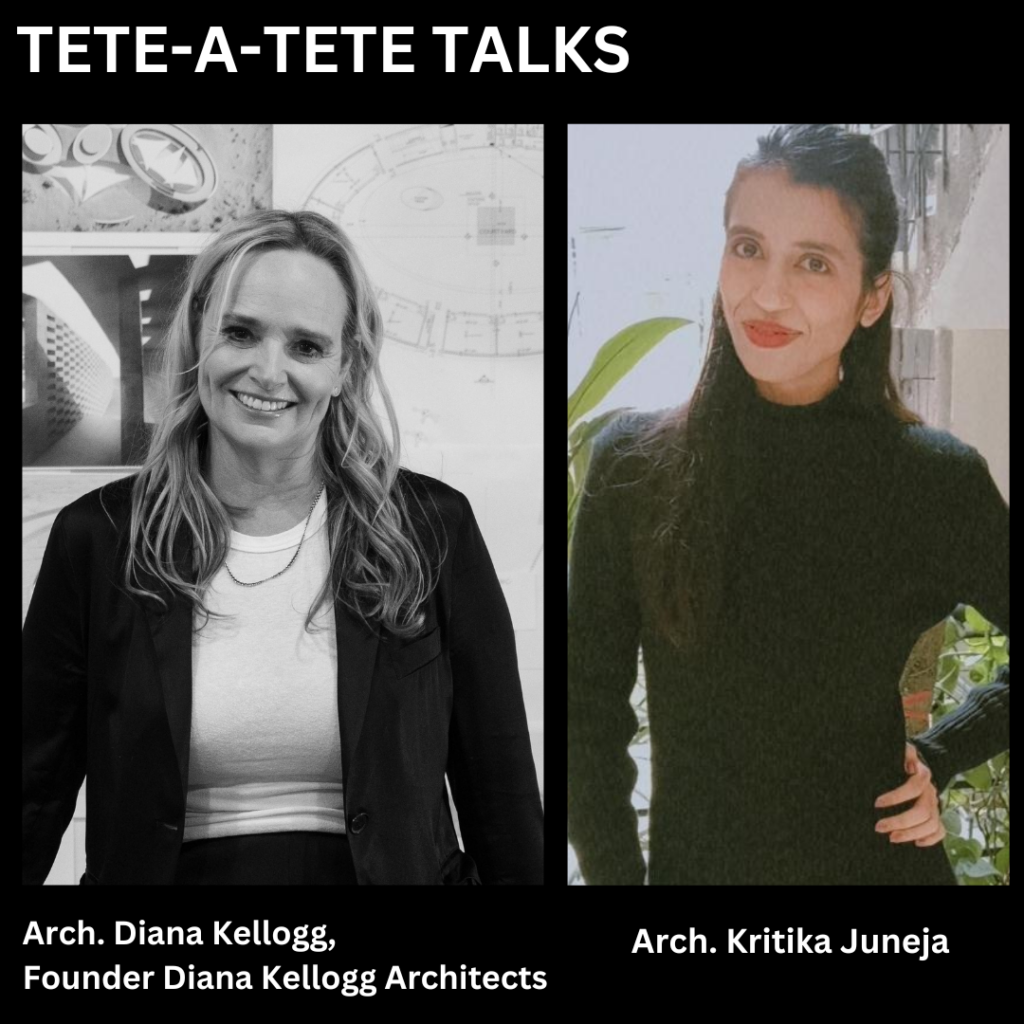
Ciao Everyone! We are pleased to welcome Ar. Dianna Kellogg for our next episode of Tete-a-Tete series hosted by none other than Ar. Kritika Juneja.
So, hi Dianna, to begin with, could you tell us about your early brush with architecture? How has your background and upbringing influenced your design principles?
I grew up in a vibrant, multi-generational household. Every summer, my grandmother’s house became a massive family hub. That closeness is something you don’t see often in the U.S households, and it left a mark on me. My grandmother, in particular, taught me that giving back to the community is a core responsibility, and I am grateful to be able to fulfill that mission in my current role.
As a women architect and designer, if you were to have a superpower, what would it be?
Women often possess hidden superpowers that go unrecognized. One of the most effective is the ability to be underestimated, when you aren’t the center of attention, you gain the freedom to work toward your goals undisturbed. Growing up in a house full of boys, I learned to navigate my own path away from the spotlight. Furthermore, women possess a unique, non-linear patience. As Zaha Hadid once noted, our minds are naturally suited for gestation allowing ideas to bubble up and develop through circular thinking rather than rushing toward a rigid, linear conclusion.
Do you think this quality reflects in your work as well?
My work is profoundly shaped by a non-linear approach. I rarely stick to a first draft; instead, I prefer to circle back to ideas, allowing them to evolve. Art is central to this, I use sketching, painting, and watercolors to initiate the broader concept of a project. These works aren’t buildings in a literal sense, they are abstract guiding principles. Even as a project becomes more concrete and technical, I constantly refer back to that original artistic spark to ensure the final design remains true to its initial essence.
As you did associate with Conscious Collective, can we get a bit sneak peek on the manifesto you shared with the audience?
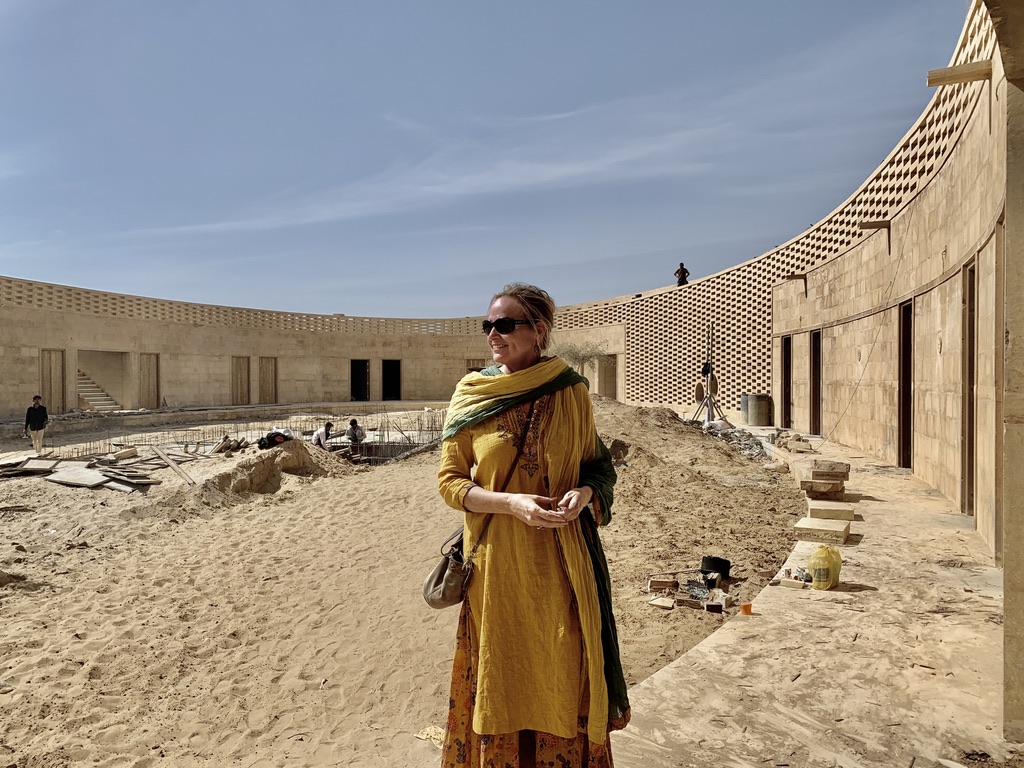
I shared my experience and journey while designing the Rajkumari Ratnavati School. The process of designing this school was one of unlearning. I arrived with a background shaped by the West, coming from a relatively young country. But in India and specifically Jaisalmer, I encountered a depth of ancient knowledge that challenged my perspective. While the building is modern, its soul is historic. The cooling systems and thermal resilience aren’t innovations I brought from the West, they are techniques I discovered by observing local craftsmen and ancestors who haven’t just survived the desert for centuries, they’ve mastered it.
What is your idea of a good design in general?
In my view, design must first master the function, it has to be seamless and reliable. But that is only the starting point. Once the physical needs are met, we can aspire to a version of beauty that provides genuine healing.
As our world grows warmer and more chaotic, architecture shouldn’t just shield us, it should settle us. It’s about moving from simple temperature control to a deeper, psychological comfort where the inhabitant feels truly at home in their environment.
What has been the driving concept behind the famous Rajkumari Ratnavati Girls’ School in Jaisalmer, Rajasthan? Was this your first project here in India or have you worked on some other projects in India before?
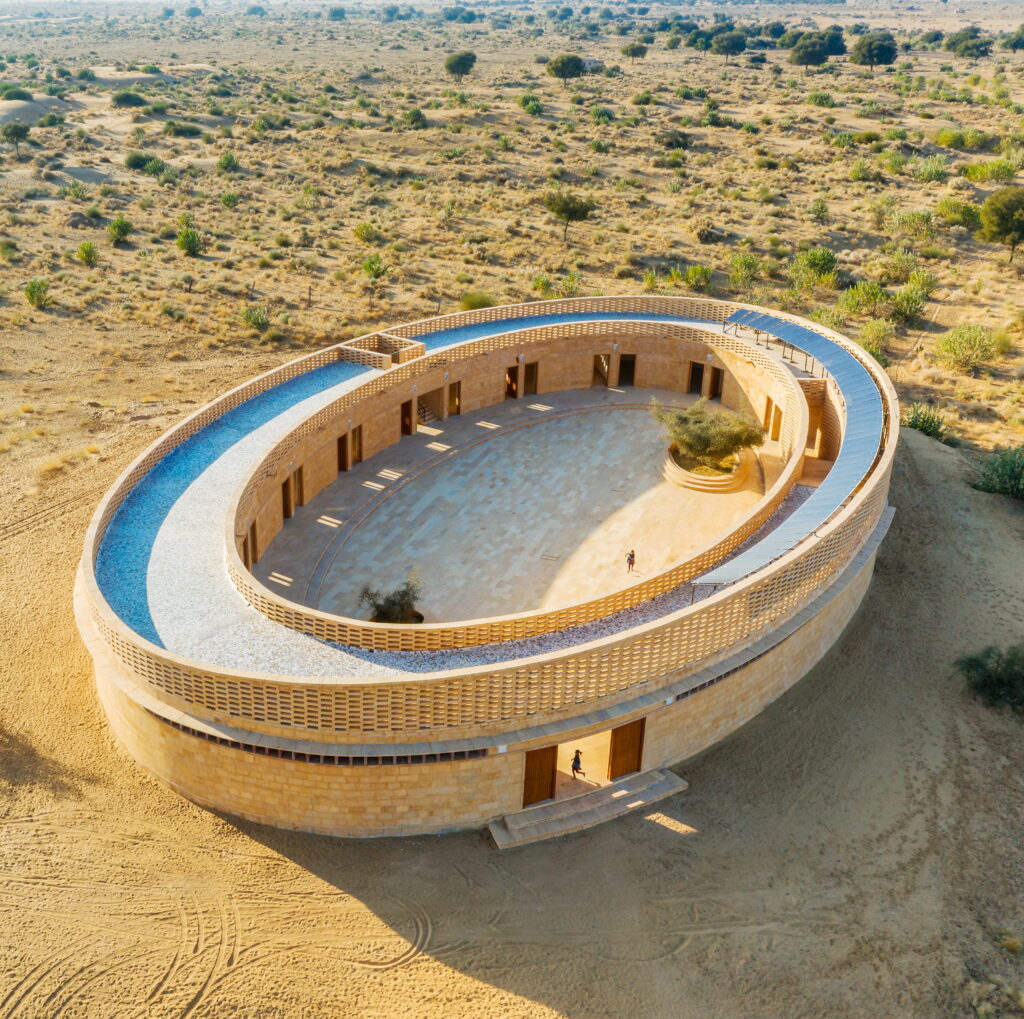
I am incredibly surprised and grateful for the immense attention this building has received. Because it was located in a remote area well outside of Jaisalmer, I assumed it would go unnoticed. This was my very first project and my first time in India, which was an overwhelming but beautiful experience filled with vibrant sights, smells, and colors. The way people interacted there was entirely new to me. Visiting the local villages and meeting the mothers and daughters profoundly moved me. I think society often forgets the value of ancient wisdom, but seeing these women in their homes, so eager to learn, explore, and openly welcome a foreigner like me was deeply inspiring.
Where did that shape came from?
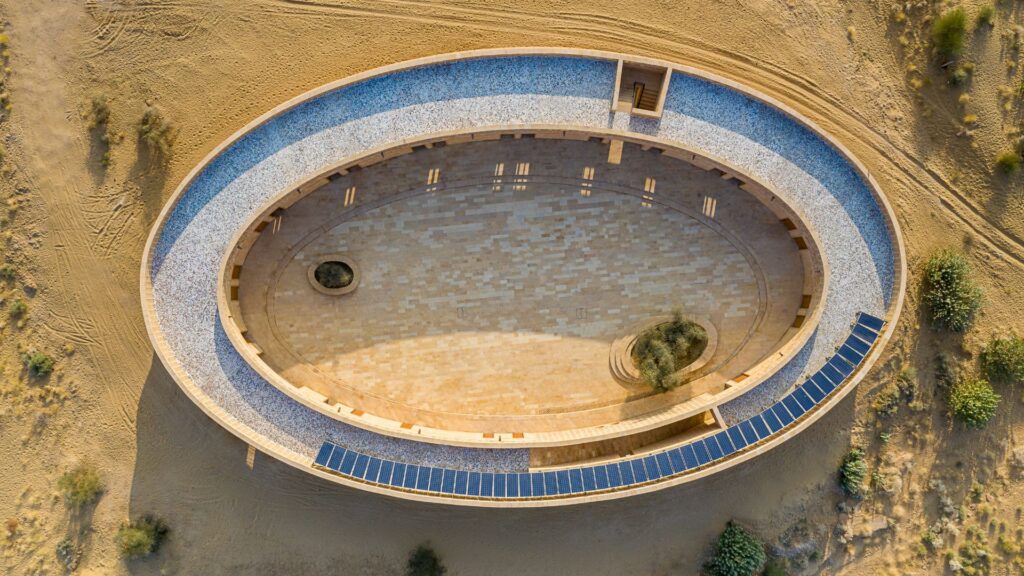
The shape was inspired by universal symbols that resonate across cultures, particularly the egg, which symbolizes femininity, the womb, and a cradle. In fact, I refer to the three buildings in the complex as the cradle, the eye, and the womb to reflect their respective functions. The shape felt like a natural evolution of the traditional courtyard layout, a familiar prototype for local children. It was crucial to incorporate recognizable regional elements so the students would feel comfortable and at ease.
Additionally, this form offers surprising functional benefits, it optimizes wind circulation and frames the sky. In a vast desert where the horizon feels endless, the building intentionally draws the focus inward, fostering a deep sense of community within the space.
Moving to the next project, the Dinosaur Museum on the flaming cliffs in the Gobi Desert Mongolia is stunning, I have seen. So, has the project already been completed? If yes, then what is the concept behind it?
The project is currently in its conceptual phase, coinciding with a major fundraising push for the museum. I am collaborating with a passionate Mongolian paleontologist who reached out to me three years ago. Our team is spent the next few months deep in the design process, building on concepts that recently won the Innovative Board Awards.
The primary vision is to create a dynamic teaching museum that returns Mongolia’s rich dinosaur heritage to its people. Mongolia has the second-largest concentration of dinosaur fossils outside the United States, yet many locals are unaware of this, leaving the land vulnerable to illegal poaching and auctions. The founder began her mission 20 years ago, traveling school-to-school with a trunk of fossils. Later, an American donor helped ship a retired American Museum of Natural History ‘Dinosaur Bus’ to Mongolia. Navigating this massive bus across roadless terrain often driving along dried summer riverbeds is a masterclass in determination. Witnessing the magic of schoolchildren chasing the bus inspired our mission to realize her dream of a world-class institution.
Unlike traditional urban museums, this facility will be built directly on-site at the Flaming Cliffs, allowing visitors to view museum exhibits while witnessing live paleontological digs. Architecturally, the building will echo the local geology and the earth’s evolutionary timeline. By utilizing stratified, multi-colored local rocks, the materials themselves will tell the story of the earth’s mineral ages alongside the dinosaur exhibits.
Furthermore, the museum will feature a climate change center to spark critical dialogue about species extinction, contrasting the sudden, external meteorite event that wiped out the dinosaurs with our modern, self-inflicted climate crisis. Experiencing Mongolia’s vast, unblemished landscape free of roads, power lines, and human infrastructure instills a profound connection to the planet. To honor this environment, the architectural strategy is to tread lightly, the above-ground structure will serve as a minimal enclosure for the specimens, while the heavy educational programming and digital infrastructure will be tucked seamlessly underground.
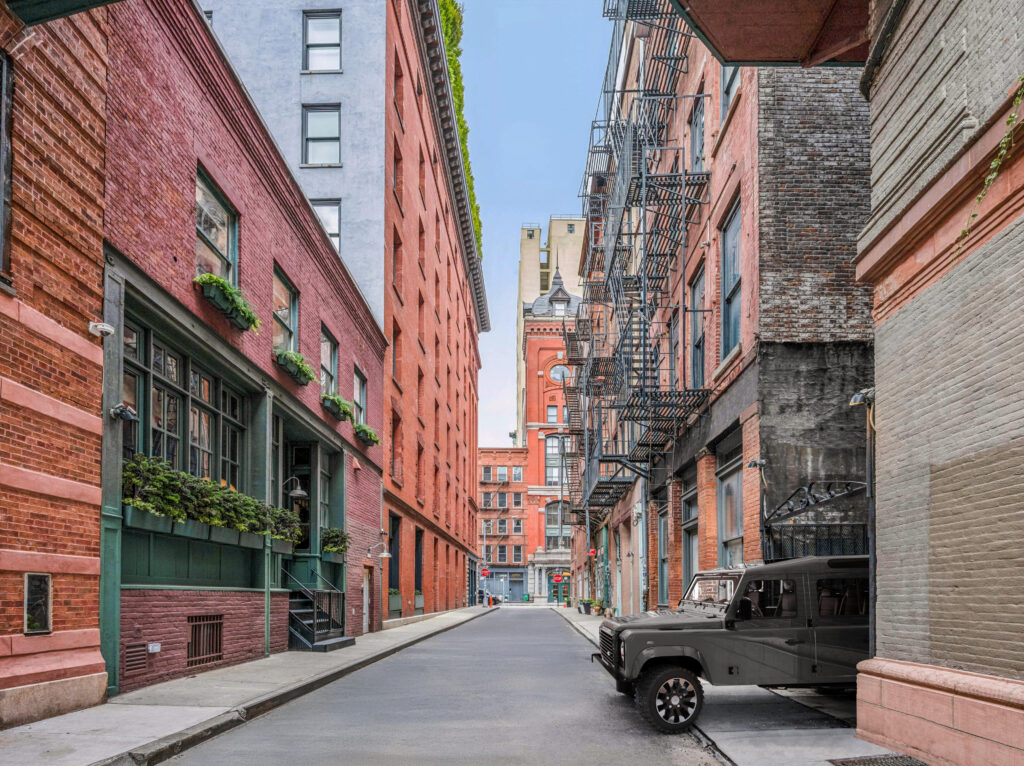
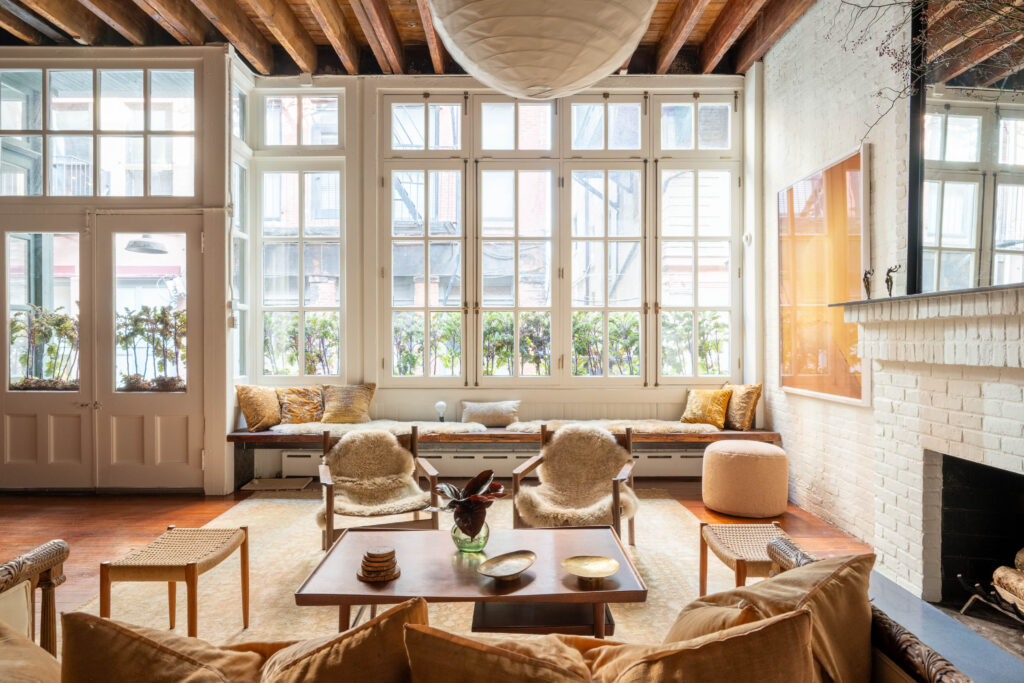
So as compared to your other projects, which often feature dynamic forms, the New York apartment, Tribeca seems to have more clean, straight lines, nude colors. So, what was your play behind it?
I began my career doing residential work in Manhattan, primarily focusing on downtown lofts, which offer a richer architectural canvas than standard apartments. I always handle both the architecture and interior design, as I believe they are inseparable.
In the New York apartment you saw, the structural bones are remarkably strong. When approaching a renovation, my goal is always to uncover and elevate the inherent essence of the space rather than imposing a completely separate, artificial concept. This philosophy remains identical whether I am designing a home for people or an enclosure for dinosaurs. It actually led to a funny conversation with my team regarding the Mongolian museum project, I reminded them that we had to establish the exact dimensions of these prehistoric creatures. We instinctively know how to scale a room for human beings, but designing a space with proper clearance for these massive animals required a completely different approach to volume and ceiling heights.
You connect to art is quite old as you have designed some art projects in your early days, how would you quantify the non-negotiable role of art in granting a physical space its unique character and narrative soul?
To me, art is completely non-negotiable. One of the most amazing things I discovered in Jaisalmer and other cities is the concept of beauty as an act of survival; there is an innate essence in all of us that aspires toward it. By beauty, I don’t mean an superficial ideal, but rather a sense of harmony that brings ease and peace. Art has always been central to my life because I am a deeply visual person, i understand a place by seeing it, not just reading about it. I view the world through the lens of architecture and, by extension, art. While it is often a contested point, I firmly believe that architecture is an art form, a complex one, certainly, but an art form nonetheless.
After practicing in New York, where design often prioritizes modernity and market forces, how did this India project, driven by social mission and traditional sustainability shifted your primary architectural focus? What is the most telling difference between the two cities?
New York and Jaisalmer are dramatically different urban environments. While New York is a massive, bustling metropolis, Jaisalmer is a much smaller city, yet it possesses a vibrant street life centered around community whether through shared music, food, or local commerce. In contrast, New York can be surprisingly isolating; people tend to brush past one another on the sidewalk rather than engage.
Cities are fundamentally meant to be spaces for community. The warmth and proximity experienced in India with all the harmonious and challenging friction of people living closely alongside one another ultimately brings out our shared humanity. That level of deep, daily human connection is something you rarely find on the streets of New York.
Could you please elucidate on your project TARA for Change?
The idea for Tara for Change emerged after the completion of the school, when I began receiving requests for projects globally. I wanted to establish an NGO that could channel donations toward underfunded initiatives, using design to prove that high-quality architecture is essential, not a secondary luxury sidelined by profit. Through my work, I developed deep connections with Indian artisans, collaborating hands-on to create lighting, furniture, and textiles. I am a major proponent of showcasing India’s incredible craftsmanship to the world.
I established the foundation alongside my two adult children, who serve as my sole board members. I believe deeply in their generation’s potential to drive change. Organizations like the Godrej Labs are doing critical work regarding sustainability and heat-resistant construction. Unlike previous generations, today’s youth were raised with climate change as a core reality, making sustainability an immediate priority rather than an afterthought. While my schedule has kept me too busy to focus on the NGO as much as I would like, it remains a vital goal for the future.
What is the one best and one worst piece of advice you ever got in your life?
The worst piece of advice I ever received came from my godmother, a highly influential working woman who had carved out a rare career in television for her time. She warned me never to learn how to type, fearing I would get stuck in a secretarial pool. Of course, she couldn’t have anticipated the advent of computers and how typing would become a universal, essential form of communication, rendering secretarial pools obsolete. Overcoming that hurdle required a shift in mindset.
Conversely, the best overriding advice I have lived by is to simply keep moving forward. In architecture, you must accept that obstacles and challenges are inevitable whether it’s shifting zoning laws or material shortages. Instead of viewing these disruptions as roadblocks, I see them as catalysts for creativity. When a project deviates entirely from your original plan, you have to stay the course with patience, resilience, and a refusal to give up.