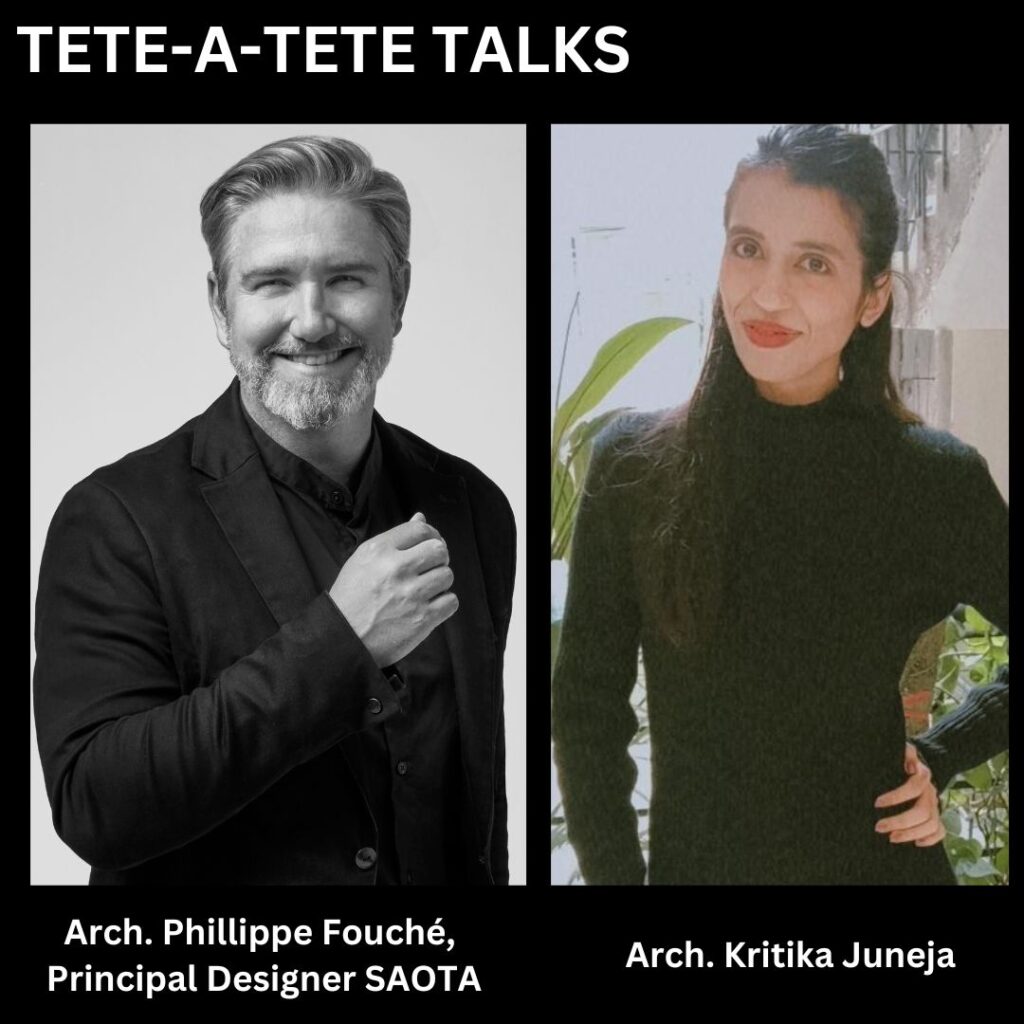
Ciao Everyone! We are pleased to welcome Ar. Phillippe Fouché for our next episode of Tete-a-Tete series and hosted by none other than Ar. Kritika Juneja.
KJ:-So, to begin with, could you tell us about your early brush with architecture? How has your background and upbringing influenced your design principles?
PF:-From a young age, I developed an interest in design, which found expression in various ways but probably most profoundly through Lego. Growing up in a small town in the northern province of South Africa in the 80’s and 90’s we had no option but to keep ourselves entertained. I always enjoyed drawing and building things but also taking them apart to understand how it worked. Later, when it was time to choose what to study, I applied to the engineering faculty, with the objective of becoming an aeronautical engineer. At the time, it was easier to get into the engineering school than it was to get into architecture. So, when I was accepted to the architecture school, I thought it was the right thing for me. I have however remained fascinated with aeronautical design, vehicle design, and industrial design, it’s kind of ingrained in the way that I see design and architecture.
KJ:-What is your idea of good design?
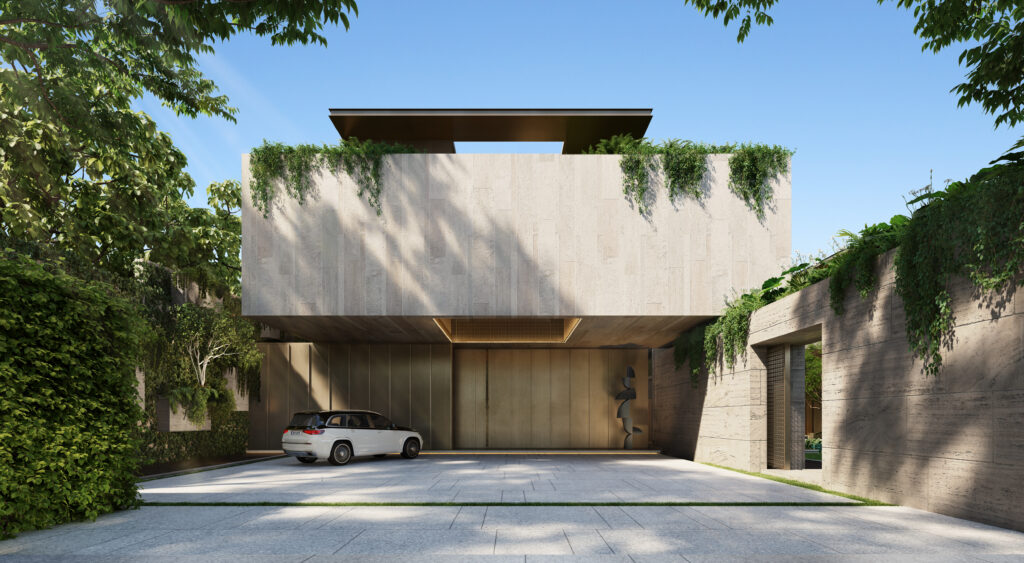
PF:-Ideally, a good design, within an architectural context, should be fit for its purpose, make the most of what the site offers, and not ignore any opportunities innate to the location. Design must be practical, of course, but when you begin to go beyond just practicality, that’s when it really starts to get interesting for architects, because we’re not just talking about climate and functionality, but also about culture and the choreography, one’s experiences when moving through space.
KJ:-How can you create designs that are timeless?
PF:-My take is that it has a lot to do with taste, which sounds superficial, but I think if you are informed about what is going on in the world and have a good sense of architectural history, you develop a sense of what’s a fleeting fad or a stylistic idea that will pass, and what’s more timeless. Proportion however remains the cornerstone, we spend a lot of time testing designs in 3D and exploring the impact of proportion.
KJ:-So are you a spiritual person? If yes, is that spirituality reflected in the designs you create?
PF:-Our ambition to move someone through design, sometimes feels like it has a spiritual side to it as there’s no formula to it, it’s very intuitive and sometimes unexpected. As architects, we have the opportunity to choreograph experiences; when we talk about spirituality, we often mention senses and elements that surround us and how we as humans connect and relate to the universe. So, it’s not just light and form and texture, it’s also sounds and smells and the connection with nature, which I believe is one of the key principles in many spiritual endeavours. We seem to be constantly seeking to find our place as human beings on this planet. Architecture is, after all, in a very basic sense, a transformation of the outer skin of our planet, re-organised with the objective of creating shelter. In a way, that talks to the idea of having a spiritual connection to a place, if you are respectful of that, making it part of your experience of a place, but also using material selectively and respectfully.
KJ:-As I recall, you mentioned trees playing a part in your design. Could you tell us more about that?
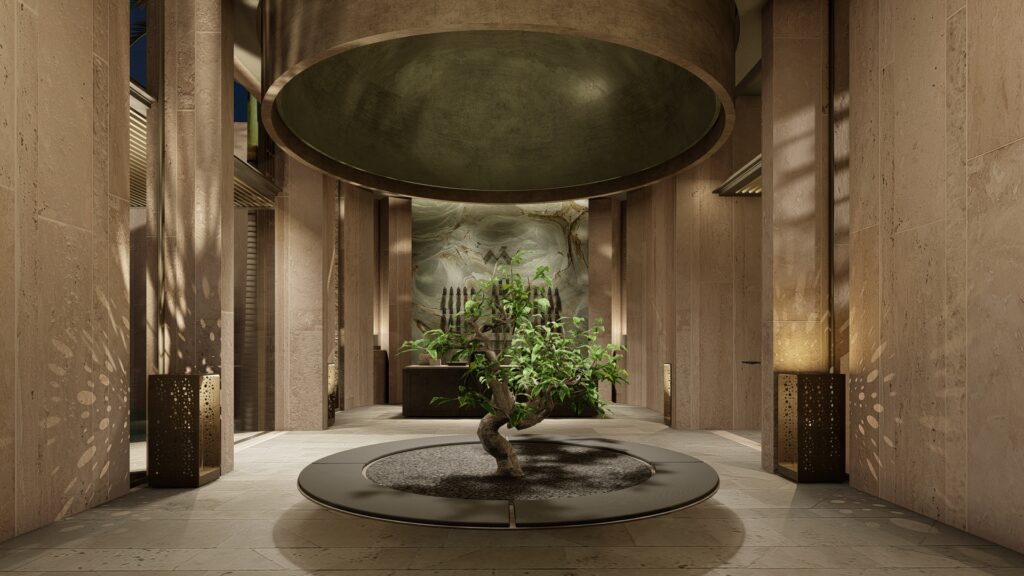
PF:-My observation is that when we started working, especially in West Africa and throughout South Africa, trees played a very important role; they are the traditional meeting places, people gravitate to the shelter they provide and according to traditional beliefs, they connect us to the elders/ancestors. In these places a tree is often a wonderful analogy to connect to our work, in some cases it’s more direct, like in the example of Cheetah Plains, sometimes it’s in a detail component, like the shadow patterns through a screen that evokes the feeling of being in the dappled shade of a tree and sometimes it’s much more abstract; a feeling of shelter and gathering.
Good design should, I think, move you in some way, and have a sense of timelessness, so that years from now, it still feels substantial, of quality, and something that will stand the test of time.
-Ar. Phillippe Fouché
KJ:-Would you mind telling me about your latest projects?
PF:-Let’s talk about the projects we’re currently busy with in India; we are working on two villas in Bangalore, as well as in Hyderabad, Indore and Delhi. We’re also designing a 100m tall tower in Pune where we’ve also previously completed a mid-rise apartment building. Mumbai, together with Alibaug, are probably our most active areas in India now, we’re busy with several Villa projects, a spa and a large apartment building. It’s been really exciting, and we’ve had the privilege of working with extraordinary clients and consultants.
KJ:-Since you have been working in India quite a bit, how has the experience been different from Cape Town?
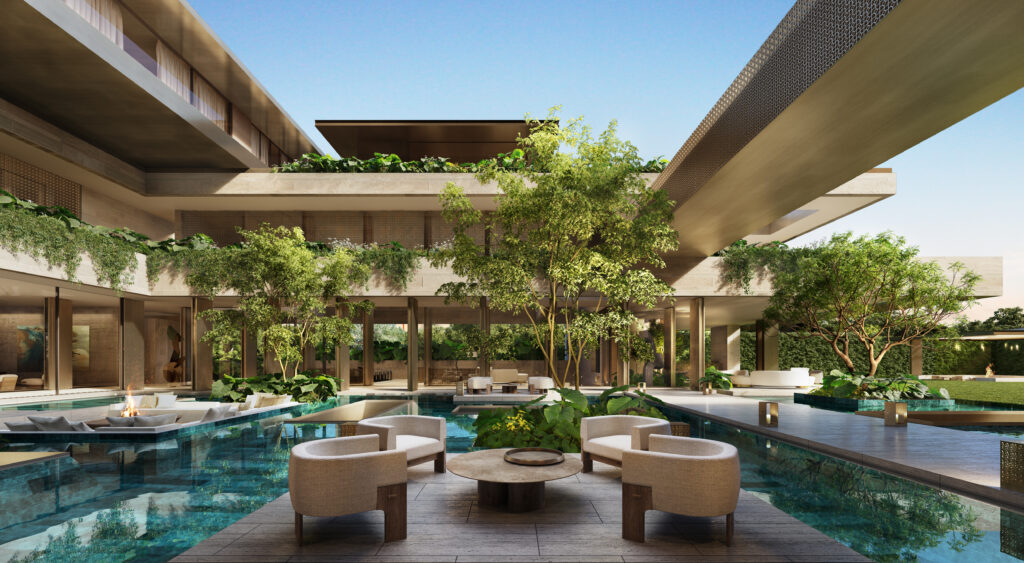
PF:- From my perspective there are many similarities between India and South Africa;besides the love for cricket, there’s a familiarity for us when we work here- perhaps it’s the friendly people, our shared colonial past, the fertile soil, or the warm climate that speaks to this connection. As in South Africa, there’s also a strong connection with nature and gardens and one can create outside spaces that people can enjoy almost all year round. The company has over 39 years of experience, initially focused largely on single residential villas on the Atlantic coast of Cape Town. Thus, the architecture we created in Cape Town became quite closely intertwined with the lifestyle there. No matter where you live, this kind of laid back, barefoot lifestyle appeals to people, whether you are in India or Switzerland. Many of these ideas translate into our work in India, where we strive to create that kind of barefoot luxury where one can feel it’s a contemporary space, welcoming, sophisticated and well proportioned, but at the same time quite relaxed.
KJ:-How could you define luxury? In your opinion, can luxury and sustainability coexist?
PF:-There are a few aspects of luxury that, in my opinion, coexist with sustainability. The first of which is the principle that space is the ultimate luxury. In many projects, especially in Europe and Japan, we work on smaller sites and try to maximise the perception of space. By simply doing that, you already feel a sense of luxury, since the spaces feel much larger than they are in terms of square meters. This sense of respect for space and resultantly an inherent efficiency means that less building is required to get a sense of luxury. In our opinion, there’s value in design that has a sense of character, permanence, quality and timelessness which over time means that buildings age better and don’t have to be replaced prematurely. Many of our older projects have undergone interior renovation but so far, none of them have been demolished. Not having to build/ re-build, remains the most sustainable way of building.